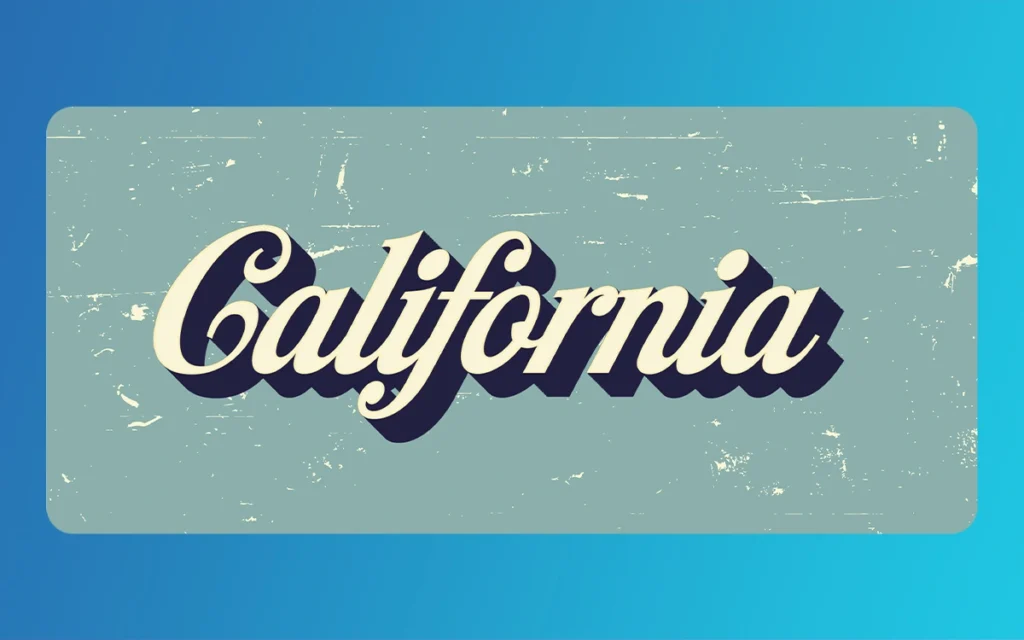
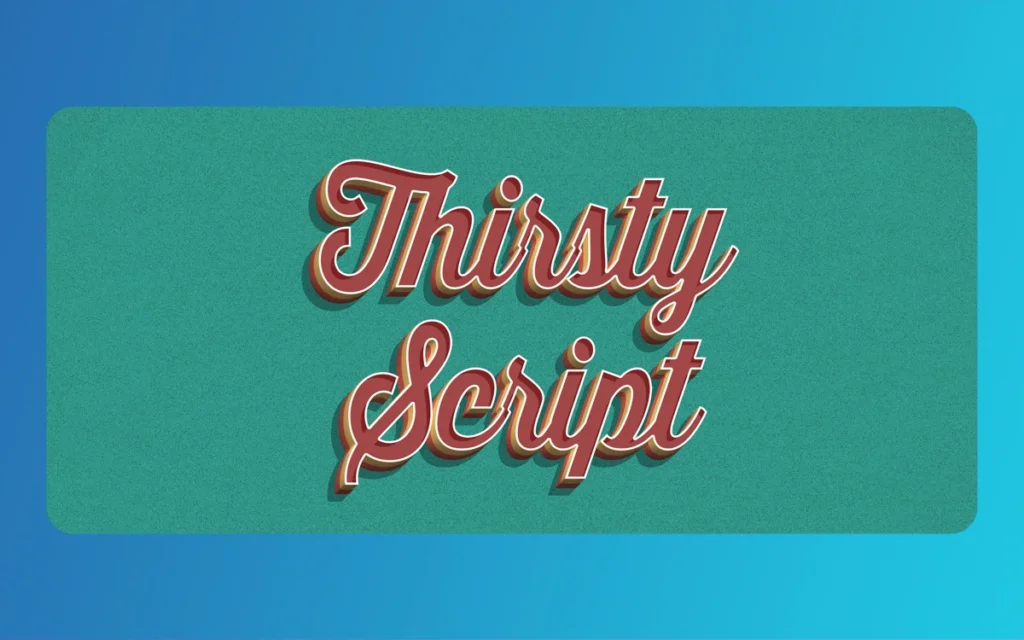
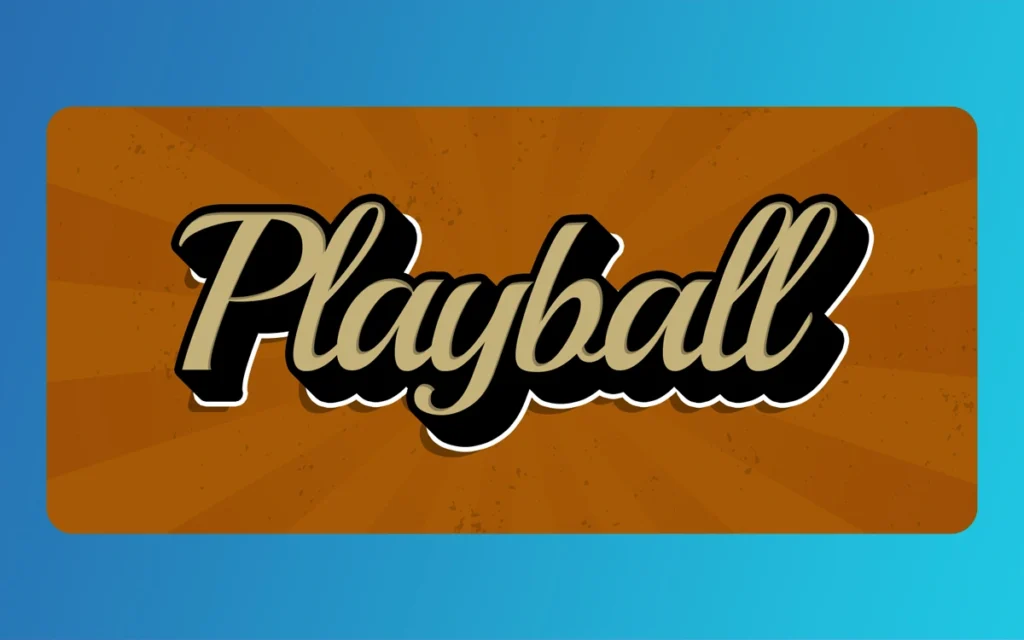
Fonts are the unspoken representatives of a brand, and this is especially true for vintage and Retro Script Fonts. Vintage fonts are nostalgic and elegant, and take the customer back to a time when advertising classics were painted by hand, shop signs were handmade, and design was in its heyday. It is a vintage type font for a designer who wants to evoke nostalgia and character. This is how to select the ideal vintage and retro script fonts. The Morphic Studio shares the information about the intricacies of vintage type writing and suggests actionable tips aimed at helping designers create audience-specific designs to address the needs of multi-service design.
Selecting Vintage and Retro Script Fonts
Characteristics of vintage and retro script fonts
Vintage and Retro Script Fonts are a type of font design that is characterized by semi cursive letters. Vintage retro fonts are also characterized by major historical movements. These design fonts have a complete set, which is the letters of the vintage and retro movements from the Victorian era. Lined and flowing, characterized by elaborate geometrics and soft streamers from a design of the style of America of the 1950’s. Each of these movements in their time also contributed to the design of modern fonts.
The features of these fonts contain intricate crafted stylistic alternates that give variation in a single type family, sophisticated ligatures that seamlessly unite letters for a genuine handwritten look. Media and Applicationsariable decorative sways that give character and embellishments to letters of the alphabet. The atypical spacing found in many vintage fonts imitates untidy imperfections of hand-lettering, and produces a distinct, handcrafted feel that greatly contrasts the exactness of computer fonts.
Historical Context and Design Evolution
The development of script fonts shows the advancement of society in tech and culture throughout time. The Victorian scripts appeared in an era where decorative design in typography was popular, and printed works. Like business cards and book covers were dominated with elaborated typography to showcase craftsmanship. During this period, society was moving into the Art Deco era of the 1920s and 30s, and printed works were created to represent the period with decorative typography. Script fonts created in this era were used for text that was flowing and decorative. For more geometric designs that incorporated sharp edges, legible text, and decorative flowing letters. The period was designed to represent luxury and modernity.
In the post-war 1950’s world, the sensibility of design changed as font scripts became more playful. Design in general was more optimistic and centered around consumerism. Which was reflected in the type design of the era, rounding off the letters in bold stroke weights. Understanding font design and historical context allows for more accurate font selection.
Retro Script Fonts
Key Characteristics to Identify
Structural Elements and Letterform Anatomy
While vintage and retro scripts, the designer constructs, should include a number of important structural components that come under the criteria. The variation in strokes weights should be observed. Authenticity and visual point of interest should be the goal. Traditional scripts contrast delicate hairline up strokes against thick down strokes and are a result of calligraphic pen work. Also, within vintage styles the foil to the organic of the Victorian is the geometric of the, for example. Art Deco which is more mid century characterized by precise angles, proportion functionalities and a organic design character.
So, in a vintage style script type writing, the flourishes serve as decorative elements for the whole letters in an updated style of design. Rather than a contemporary sans serif font where a rule style is picked, vintage scripts embrace a full and rounded style. The balance of ornamentation style increase the versatility of the script vintage type.
Character Set Completeness
Character set variedness differentiates vintage professional-grade fonts from less experienced choices. Good quality typefaces contain uppercase and lowercase letters designed to work together as sets, along with lowercase letters featuring connecting strokes that allow the flow of seamless cursive. The font even includes numbers specifically designed for consistency, whether for pricing on a vintage products advertisement, or dating vintage wedding invites.
Character punctuation must complement the font style with consistency and accurate weight to match letter forms. Internationally focused designers need character set completeness to sustain quality over diverse character English letters systems. This completeness offers the versatility required to diverse and multilingual projects and localized to branding marketing campaigns.
Criteria for Your Projects
Matching Fonts to Theme and Era
Successful font selection begins with homework relevant to the thematic requirements and the target era of the project. Elegant Art Deco font scripts work beautifully with prestige branding and luxury projects where sophistication and exclusivity, along with timeless quality, sophistication, and exclusivity are key. Vertical and horizontal geometric letterforms with streamlined arching curves are best suitable for high-end fashion, premium beverage packagings, and upscale hospitality branding. Art Deco script writing style communicates refinement and sophistication without looking too genteel and dated.
Conversely, more playful scripts from the 1950s, and inspired by that decade, are more energetic and approachable and work well for projects aimed at children, younger target groups, or nostalgic demographics of older adults. Examples of projects that would be best suited are retro diner concepts, some of the children’s apparel line branding like those from The Spark Shop, vintage toy packagings, and even some retro entertainment properties that are designed in the style of 1950s Americana. Mid-century scripts from that era, 1930 to 1950, are very friendly and rounded and make for excellent warmth and approachable branding and design work.
Readability and Practical Application
At first, a design’s ripples, eye-catching, attraction, and features may fascinate the audience, but the endurance success of a design depends on its practical usability. Therefore, designers are required to test the vintage scripts at different sizes and the numerous applications they may utilize from large formats like posters where detailed ornate visuals may be used to small formats like websites and product labels where engraving visuals are used where legibility is necessary. Designs that are ornamented with heavy and distressed traits may even impressively work as scripts with display type for headlines and texts but normally are unsuitable for body text and long reading.
Vintage scripts are strategically and effectively partnered with typefaces that are complementary to the vintage scripts to optimize interest and functionality. Modern sans-serif typefaces are used as they contrast effectively when used with ornate scripts. This contrast is achieved with contemporary lettered fonts that are clean and balance the decorative features used. This balance more effectively achieves the primary purpose of incorporating vintage typefaces which is achieving those desired emotionally appealing features when used for headlines and key messages. Most of the supporting texts become informational and for that reason a vintage type face may not be as effective to use as its low emotional appeal may make it more unreadable.
Resource Management and Licensing Considerations
Retro Script Fonts
Font licensing is a key but often disregarded aspect when it comes to font designs. Without a font resource, a designer has to spend more time and money to derive font design. Designers take a loss. That is why font resources that are free are at the top of the charts when it comes to projects with a tight budget. Designers may have to spend time reviewing licensing terms and costs which in the end may be time and cost effective. Most free fonts highly restrict use of them when it comes to designs with a commercial basis. This commercial basis includes the fonts on the designs. Professions get complicated when commercial use is not obtainable thus slowing the workflow. Adding an attribution may be a requirement which means a client deliverable is more complicated.
Marketplaces like Adobe Fonts and Envato Elements offer extensive premium vintage script font collections along with professional assistance, continuous updates, and clear commercial licensing. Moreover, they feature entire font families with varying weights and styles. Because of this, they offer a high degree of versatility in design. In addition, premium font collections feature additional and more complete character sets along with other more sophisticated features such as better pairing of letters. more refined kerning, and contextual alternates that automatically substitute related letters.
Advanced Professional Typographic Features
Integrating OpenType features, professional vintage script fonts make a considerable difference in their overall typographic impact. For example, stylistic alternates offer custom design choices since they generate additional character versions. Because of features like this, they expose their typographic craft in a way that helps avoid the distinct repetition of letterforms. Compounding the fluidity of the text, ligatures create handwritten character connections to solve spacing issues that arise with specific letter pairs.
Unlocking the full creative potential, design software like Adobe Photoshop allows text typographic control through the character panel. By providing entry and exit strokes, swashes add decorative letters to headlines that enhance overall design comp and offer more control and balance. Maintaining and hand-crafting the vintage script quality, contextual alternates automatically substitute letters in a word based on the letters that surround them making the text more flowing.
Rough textures, energetic strokes, informal character
Bold display fonts, distressed elements
Usage Practicalities Designers
Creative Placement and Order
Applying vintage and retro scripts requires care in moderation and creative positioning of design elements. Focusing vintage typefaces on headlines, logos, and any primary messaging that needs emphasis, helps avoid visual clutter. If all elements of your design use elaborate, decorative type, nothing stands out and the entire design hierarchy becomes invalid. Place the most decorative vintage scripts on primary headlines to let the type shine and juxtapose them with an understated font in the subhead and body text.
The genuine vintage look involves more than just the choice of fonts to include design elements combinations like fonts from the 50s with icons from that time or vintage frames from the 50s to make the viewer captured by that time of period in history. The design elements you choose will need to be the same period that vintage fonts you use represent like art deco fonts that represent the 1920s will need to use borders and frames from that same to be art deco and you will want to use vintage illustrations from the 50s to be more casual with lettering and fonts. The design and vintage fonts together represent more immsively than the fonts alone.
Testing Across Media and Applications:
Working with vintage scripts fonts printing uses like screen printing, and fabric and paper printing needs more careful screen printing. Materials in the form of paper need to be tested in the case of paper stock to be sure the writing will be clear and legible to the audience. You can order a sample paper print to make sure the design and paper work well together and avoid mistakes.
The application of the relevant deteriorated textures, the presumed aged appearance, grunge stylings. The dimensional shadow work may augment the perceived authenticity of the vintage appearance, but such treatments require careful calibration. Some subtle weathering treatments may add to the overall positive character resonance historical relevance to the processed image; almost suggesting age and/or workmanship. However, artifacting too much of the image may compromise legibility or, even worse, make formatting appear unintentional. As with vintage typography, comics, and other graphic-related projects, consider the effects to be used. For instance, stacked shadowing effects may be ideal for old-school superhero titles. While more subtle textures are better suited for vintage styles in editorial layouts.
Certainly, more complex, professional design programs, such as Adobe Illustrator, can easily be utilized to customize and manipulate vintage script fonts in a more productive manner. Specifically, Illustrator features a vector-based working environment. Which is ideal for such alterations due to the precision and flexibility of working with vector-based design tools.
Media and Applications
This allows designers to manipulate and troubleshoot ligatures and swashes. For instance, designers may want to experiment with a number of different character combinations to determine the best fit and most effective design. Designers can also convert text to outlines in order to control custom spacing, alignment. Or even the overall visual flow of the piece by creating distinct letterforms. Design jobs demand the ability to adapt to scales across print and digital formats. Vector-based typography eliminates pixelation and loss in quality as outputs are adjusted. This becomes even more relevant when working with vintage scripts that have fine, detailed strokes and elements that need to remain legible as they are adjusted across a career’s worth of scales. Testing the designs at the business card and billboard scales on the spectrum helps to clearly identify problems.
Color and Contrast Considerations
Color selections alter the custom vintage scripts and, in turn, the message that they communicate to the audience. Attention to appropriate period colors can enhance authenticity. Jewel tones and metals are more suited to accented Art Deco scripts. While 1950’s Americana styles can be designed with more complimentary colors in primary and pastel tones. Contemporary designs tend to be more flexible with these rules by introducing more surprising, unanticipated colors to vintage styles that remain reasonably true to the typography.
Attention should be paid to the contrasting of typography to backgrounds, as detailed cursive scripts can have varying weights of strokes. Thin hairline strokes can completely disappear on some backgrounds which renders the cursive illegible. Reading the text on different colored backgrounds. While in different display positions and lighting helps to keep your vintage typography legible and keep visual attributes as well.
Retro Script Fonts
Avoiding Common Mistakes
Overuse and Lack of Design Restraint
Vintage script fonts are being used far too commonly and too frequently in a project. Which is one of the biggest mistakes that designers make. Multiple use of beautiful typefaces is prominently displayed, which adds a disorganized and unstructured design. Where there is no visible hierarchy or organized visual to the design. To maintain complete unity in a design, professional designers use a limit of one or two typefaces. Then perhaps one accent font to match some components of the project. This allows easy pairing of fonts, and helps in making visual unity to the project.
Another common mistake includes choosing a typeface solely based on its outward appearance. While a certain Victorian script may be gorgeous, it may be completely unusable for a tech startup. A successful typeface selection includes a compromise between the aesthetic preference and the communication goals, audience expectations, and practical needs. Always assess typefaces within the context of specific projects rather than in a vacuum.
Technical and Production Problems
Not checking for complete character sets before locking down a typeface can have detrimental effects in production. Without before testing, projects can be suddenly halted mid-production to fix missing pieces of the character set. This might force a designer to rearrange their content, try to find another character that has the proper style to fit within the design, or to scrap and start over with a new typeface. Proper testing during selection saves these headaches and keeps production moving smoothly.
Another oversight, to be more precise, the testing of vintage scripts might not be than sloppy. Some fonts that seem legible and charming at certain sizes for display layouts can often lose their legibility at smaller sizes. Also, in the opposite direction, some scripts may appear charming at smaller sizes, but can lose this quality entirely during larger display sizes. Testing for these conditions should happen more towards the beginning of a design process.
The Incorporation of Modern Workflows
Digital and Print Production
In modern design projects there is often a need for assets to work well in both digital formats and printed formats. Vintage script fonts need to keep their character and legibility whether viewed on a retina screen, printed in a glossy magazine, or embroidered on a fabric. For this cross media versatility, a careful selection of fonts is of utmost importance. Which is why designers prefer vintage script fonts that include clean vector paths and have a balanced amount of detail for the various reproduction techniques that may be done.
For professional printing designers need to convert text to outlines or embed fonts to avoid substitution issues. Vintage script fonts often have complex OpenType features and alternative characters. That may not render properly in the digital drafts if fonts aren’t embedded correctly. Or if the printing service providers do not have the same fonts. Awareness of the fonts used within the design in collaboration with printers and fabricators is essential to avoid printing issues. Misalignment of the final printed designs with the design.
Designing Responsively
Designing for web and mobile applications must consider typesetting layout scripts especially for when screens are responsive. Leggible scripts may become decorative as space used may become denser on mobile screens. Clearly establish typographic scripts to help designers know when to imprint and replace with texts that can be read easily depending on the viewport.
Performance is also impacted by vintage fonts that are used for sites and applications. The use of web fonts and other scripts may result to a drawdown of a web page especially for vintage fonts that have an extensive use of scripts and open type. Web font loading can be performed selectively by using system fonts for a page. While the custom typefaces are downloading or by limiting the character subsets to only the glyphs that are needed.
Final Statement
Designing with the right vintage and Retro Script Fonts can lead to the right sensation that evokes an emotional response from them and sticks in their minds. Following historical context and the right design with a focus on vintage type is key to achieving the right selection and functionality.
The best designers recognize that vintage script fonts represent much more than what meets the eye. They understand these fonts serve as a means of communication that holds significance beyond their obvious interpretations. These typefaces breathe emotion into brand identities, bolt marketing messages, and unify visual stories across varying platforms. Whether you want to conjure the lavishly sophisticated Art Deco glamour, the 1950s Americana upbeat charm. Or the masterfully ornate Victorian craftsmanship, the mood vintage scripts offer is one that brings a heightened instant connection.
In your next creative project, select your vintage script fonts using a balance of unadulterated creativity and systemized synthesizing. Test your typeface selection against defined outcomes. Meet the required licensing and technical parameters, and most importantly, be simple and direct; nothing confounds communication more than pseudo-aesthetic gobbledygook. By vintage scripts, you will cement your creative versatility and sharpen your mastery of typography to communicate concepts, evoke emotions, and achieve design creative outcomes that will endure across time.
Building Immersive Worlds: Integrating 2D Animations into Unity Game Design
In the modern gaming environment, the distinction between “2D” and “3D” has blurred into a spectrum of stylistic choices rather than a hierarchy of quality. While 3D graphics often chase the horizon of photorealism, 2D animation remains the heart of expressive, artistic, and tactile game design. From the hand-drawn elegance of Cuphead to the pixel-perfect […]
March 6, 2026
Mastering Skeletal Animation in Unity: A Complete Guide for Developers
Imagine breathing life into a lifeless 3D model, watching it stride confidently across your game world or execute a flawless combat combo. That’s the magic of Skeletal Animation in Unity, a powerhouse system that powers everything from indie platformers to AAA blockbusters. At its heart, skeletal animation grips rigs and Unity’s Mecanim framework to deform […]
March 5, 2026
A Professional’s Handbook to Rigging and Animating 2D Assets in Unity
Game development is always changing, and the difference between 2D and 3D workflows is becoming less clear. If you have experience with 3D tools like Blender, Maya, or 3ds Max, Unity’s Animating 2D Assets package can help you make the switch to 2D more easily. Rather than using frame-by-frame sprite swapping, many developers now use […]