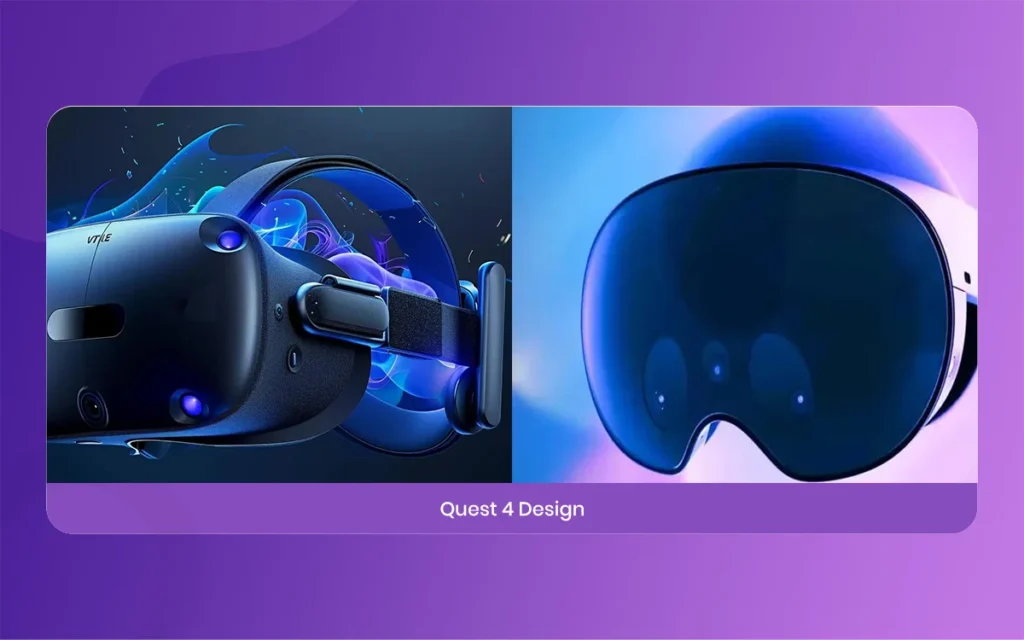
Virtual reality is moving faster than ever, and everyone in the tech community is talking about what Mark Zuckerberg’s team is cooking up next. If you follow VR news on The Morphic Studio, you know how much the Quest 3 changed standalone gaming and mixed reality when it arrived. But now, all eyes are turned toward the upcoming Meta Quest 4, and people want to know if it will completely redefine how we play, work, and connect online.
Recent industry leaks, internal memos, and supply chain updates in 2026 show that Meta had to rethink its entire hardware roadmap. While early whispers made people hope for a fast release, the real story behind the Meta Quest 4 is full of surprising pivots, brand new display technology, and deep artificial intelligence features. Here are the seven incredible secrets you need to know about the next generation of standalone mixed reality.
Meta Quest 4
Secret 1: The Meta Quest 4 Timeline Reset and New Codename
For several years, Meta followed a very predictable calendar for launching headsets. We got the Quest 2 in late 2020, the Quest Pro in 2022, the Quest 3 in 2023, and the affordable Quest 3S in late 2024. Because of that pattern, many tech fans thought the Meta Ques 4 would land on shelves right in late 2026.
However, verified reports and comments from Meta leadership confirm that the original 2026 launch plans were completely scrapped. The original prototype projects, which had the internal codenames Pismo Low and Pismo High, were canceled so Meta could focus on smarter designs and AI glasses. Development was restarted under the new internal codename Griffin. As a result, the official release of the headset has moved to the second half of 2027 or early 2028. This gives current Quest 3 owners plenty of time to enjoy their current headsets without feeling left behind.
Meta Quest 4
Secret 2: Dual Headset Strategy for the Meta Quest 4 Generation
Meta is not just building a single box to put on your face anymore. One of the most exciting secrets behind the Meta Quest 4 cycle is that Meta is creating two very distinct types of hardware for two different audiences.
The first device is an ultralight mixed reality device, often referred to in leaks as project Puffin or Phoenix, which might be called Quest Air. This design removes the heavy battery and primary processor from the visor itself. Instead, it connects to a small puck that you slip into your pocket or clip onto your belt. The second device is the true Meta Quest 4, which remains a full, all in one powerhouse where everything sits right inside the headset for total freedom.
Meta Quest 4
Secret 3: Micro-OLED Displays Powering Meta Quest 4 Visuals
When you put on a virtual headset, the screens make or break your whole experience. The Quest 3 uses fast LCD panels, which work well, but they simply cannot produce pure dark blacks or deep contrast. Dark rooms in games can often look a bit gray and washed out.
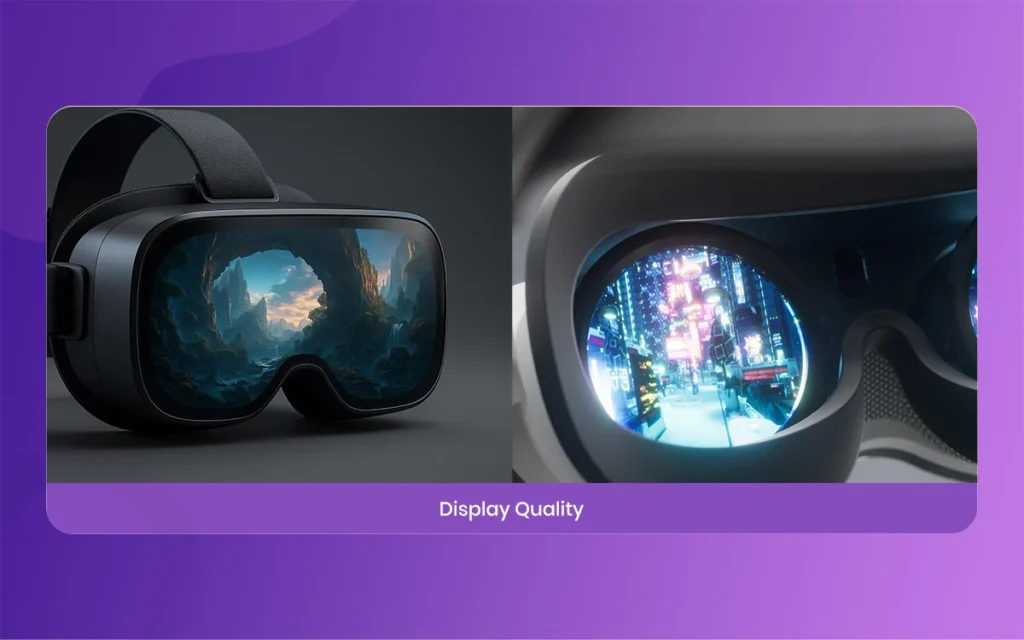
With the Meta Quest 4, supply chain data reveals that Meta is testing ultra-sharp Micro-OLED panels. These tiny, dense displays bring near 4K clarity directly to each eye, matching the kind of visual punch seen on ultra-premium spatial computers. You get deep shadow detail, bright vivid colors, and sharp text that is easy to read while working on virtual desktop screens.
Meta Quest 4
Secret 4: Eye and Face Tracking Become Standard on Meta Quest 4
When Meta launched the Quest Pro in 2022, eye tracking was one of its best features. The technology was too expensive to put into standard consumer hardware back then. That compromise is finally going away with the upcoming Meta Quest 4.
Built-in eye tracking unpicks a major rendering trick known as energetic foveated rendering. The headset tracks your pupils and only renders maximum graphical detail at the exact millimeter where your eyes are looking. Your peripheral vision is rendered at lower detail, which saves massive processing power and gives games console-grade visuals without overheating the battery. In addition, face tracking cameras will allow your statistical avatar to smile, wink, and talk naturally inside social apps.
Meta Quest 4
Secret 5: Next-Gen Snapdragon Silicon Inside Meta Quest 4
Every standalone VR headset depends heavily on its onboard processor. The Meta Quest 4 is expected to run on Qualcomm’s upcoming Snapdragon XR2 Gen 3 chipset.
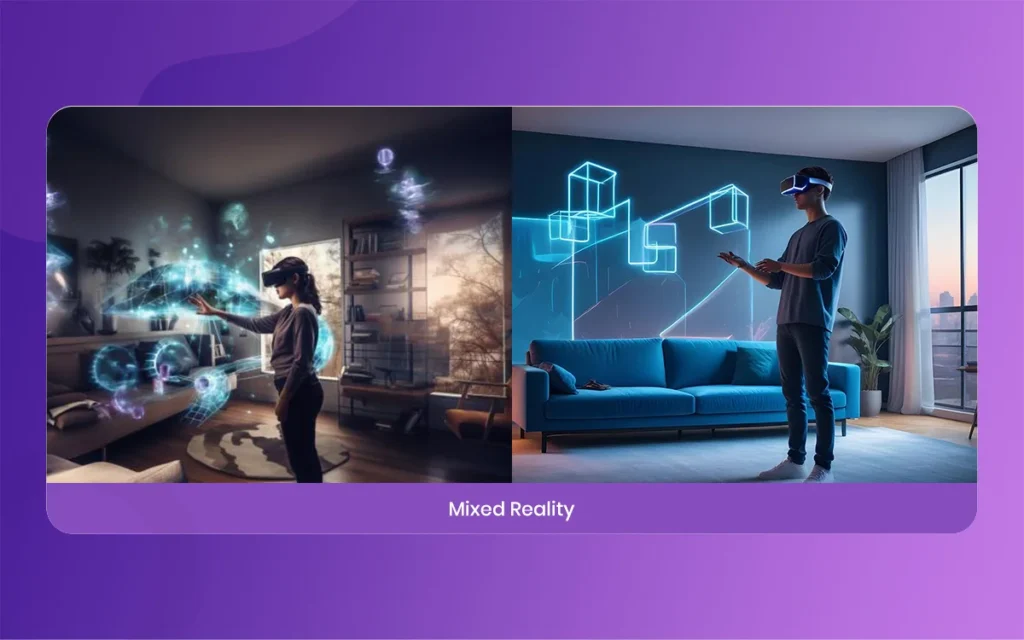
Early benchmarks for this silicon indicate double the raw graphical compute performance. And more than triple the dedicated AI processing power. This dedicated neural engine handles instant room scanning, real-time hand gesture tracking, and instant background subtraction for mixed reality. The result is a perfect transition between your real living room and virtual objects without any awkward latency or jittering.
Meta Quest 4
Secret 6: Ergonomic Ski-Goggle Design of Meta Quest 4
One common complaint about modern VR headsets is Mass. Having a heavy plastic box hanging off the front of your face can cause neck fatigue during long movie nights or extended gaming sessions.
Meta engineers are redesigning the housing for the Meta Quest 4 to look and feel more like compact ski goggles. By combining thinner pancake lens optics, improved plastic alloys, and better Mass distribution with balanced headstraps. The general profile is significantly slimmer. This design shift makes wearing the headset feel natural, light, and comfortable for hours at a time.
Meta Quest 4
Secret 7: Horizon OS and the Changing Meta Quest 4 Ecosystem
The software running the hardware is just as critical as the lenses. Meta has rebranded its VR operating system as Meta Horizon OS and opened it up to third-party hardware builders like ASUS ROG and Lenovo.
This open ecosystem means that the Meta Quest 4 will launch into a massive, thriving universe of cross-device apps. 2D productivity windows, and cloud streaming tools. You will not be locked into a closed garden, because your favorite games. Productivity workspaces, and entertainment hubs will perfectly travel across Horizon OS certified devices.
Meta Quest 4
Detailed Failure: Meta Quest 4 Rumored Specs and Features
To make it easy to understand how the upcoming hardware compares to current models. Here is a detailed failure of the basic specifications, expected features, and industry estimates:
Primary Display Technology: The current Quest 3 uses dual fast-switch LCD panels. While the Meta Quest 4 is expected to step up to high-density Micro-OLED displays with rich contrast and pure black levels.
Resolution Per Eye: The Quest 3 delivers 2064 by 2208 pixels per eye, whereas the Meta Quest 4 is targeting near 4K per eye for sharp text and crisp virtual environments.
Primary Processor: The Quest 3 runs on the Snapdragon XR2 Gen 2 chip, while the Meta Quest 4 is slated to carry the Snapdragon XR2 Gen 3 processor with advanced neural AI units.
Eye and Face Tracking: The Quest 3 does not include internal eye or face cameras, but the Meta Quest 4 is expected to include both tracking systems right out of the box.
Optics and Lenses: Both the Quest 3 and Meta Quest 4 utilize slim pancake optics. But the new headset will feature a more compact, aeroenergetic lens assembly.
Operating System Platform: The Quest 3 runs standard Horizon OS, and the Meta Quest 4 will grip an expanded version of Meta Horizon OS with third-party interoperability.
Expected Launch Window: The Quest 3 launched in late 2023. While the Meta Quest 4 is projected for late 2027 or early 2028 following the internal project reboot.
Target Price Point: The Quest 3 started at 499 to 599 dollars. Whereas the Meta Quest 4 may target a slightly higher range of 599 to 799 dollars due to premium Micro-OLED components and advanced sensors.
Final: Is the Meta Quest 4 Worth Waiting For?
The road to the Meta Quest 4 has been filled with unexpected changes, internal strategy resets, and ambitious technical upgrades. Meta clearly wants to make sure its next flagship headset delivers a true generational leap rather than just a minor speed bump.
If you already own a Quest 3 or Quest 3S, you can rest easy knowing your current hardware has a long and useful life ahead of it. However, if you are looking forward to what comes next, the promise of Micro-OLED visuals, built-in eye tracking. Lighter goggle frames, and raw AI processing makes the Meta Quest 4 one of the most exciting pieces of technology on the horizon. Keep checking back with The Morphic Studio for the latest leaks, developer previews, and tech failures.
Augmented Reality News: 7 Exclusive Breakthroughs for an Incredible Year | The Morphic Studio
Navigating the Latest Augmented Reality News Environment Welcome to another exciting deep dive into the statistical universe brought to you by The Morphic Studio. If you have been keeping up with tech headlines lately, you already know that statistical overlays and spatial computing are changing how we interact with our physical surroundings. The year 2026 […]
September 1, 2026
VR Horror Games: 13 Incredible Titles for a Brutal Scare – The Morphic Studio
Welcome to the ultimate guide for anyone looking to test their nerves inside a headset. When you strap a display to your face, flat screen rules no longer apply. VR Horror Games You are no longer watching a character run from danger on a distant monitor, because you are right there in the middle of […]
August 31, 2026
Meta Quest 4 Release Date: The Master Guide to 2026’s Most Incredible VR | The Morphic Studio
Virtual reality has traveled a long road over the last few years. We have moved from bulky, tethered headsets that needed expensive gaming computers to sleek, standalone machines that fit right inside a small travel backpack. If you follow immersive technology here at The Morphic Studio, you already know that Meta has been leading the […]